
Port-au-Prince, Friday, February 6, 2026 — As a highly symbolic date in Haitian political history approaches, inter-Haitian dialogue appears to have reached a decisive stage with the appointment of members to the future transitional presidential college. This development occurs amidst strong popular expectations, persistent institutional uncertainties, and increasing diplomatic pressure for lasting political stabilization.
Members of the Presidential College Now Known
According to the final conclusions from the inter-Haitian dialogue, the transitional structure will be based on a presidential college composed of three figures representing key sectors of national life:
- Leslie Voltaire, representing the Transitional Presidential Council (CPT);
- Charles Tardieu, designated on behalf of civil society;
- Judge Jocelyne Casimir, representing the Court of Cassation.
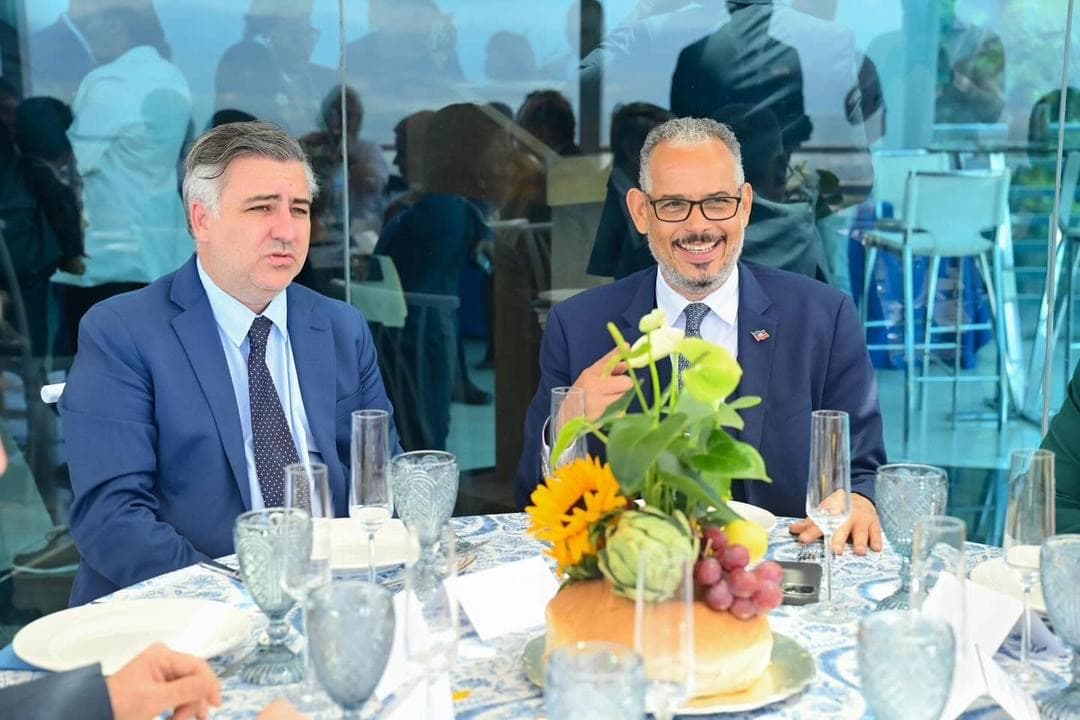
This configuration confirms the option of a shared executive aimed at balancing political, institutional, and societal influences in managing the transition.
A Symbolic Handover at Villa d'Accueil
According to information, an official ceremony is scheduled for February 7 at Villa d'Accueil, in the presence of the diplomatic corps and several guests. The president of the Transitional Presidential Council (CPT) is expected to deliver a farewell speech before handing over the reins of the executive to the Prime Minister.
This step marks an attempt at institutional formalization of the transition, in a country where political mechanisms remain weakened by several years of instability, security crisis, and institutional blockages.
A Transition Still Seeking Legitimacy
While the appointment of the presidential college represents organizational progress, it does not resolve all questions. Several political currents and social actors continue to question the legitimacy, feasibility, and effectiveness of such a mechanism.
The idea of a presidential college is based on the desire to avoid the concentration of power in the hands of a single individual. However, some observers fear that this formula could lead to internal rivalries or slow decision-making, particularly in a national context requiring rapid responses in terms of security, economy, and governance.
The Immediate Challenge: Restoring Trust
Beyond institutional arrangements, the main challenge remains the reconstruction of trust between the state and the population. Expectations are high: improved security, the fight against corruption, economic recovery, and the organization of credible elections.
The success of the presidential college will therefore depend less on its composition than on its ability to produce concrete results and maintain a minimum of political cohesion.
A Decisive but Not Definitive Step
Hours before February 7, Haiti appears to be entering a new phase of its political transition. The appointment of members to the presidential college and the announced handover of executive power are important signals, but they alone will not be enough to resolve a deep multidimensional crisis.
Lasting stability will likely come through broader political consensus, effective governance, and the gradual reconstruction of democratic institutions.
Jean Wesley Pierre / Le Relief