ULCC-BINUH: Cooperation Under Sanctions to Strengthen the Fight Against Impunity
By La Rédaction · Port-au-Prince
· 3 min read · Updated 24 April 2026
Translated from French — AI-assisted and reviewed by the editorial team. The French version is authoritative. Read the original · About our translation policy

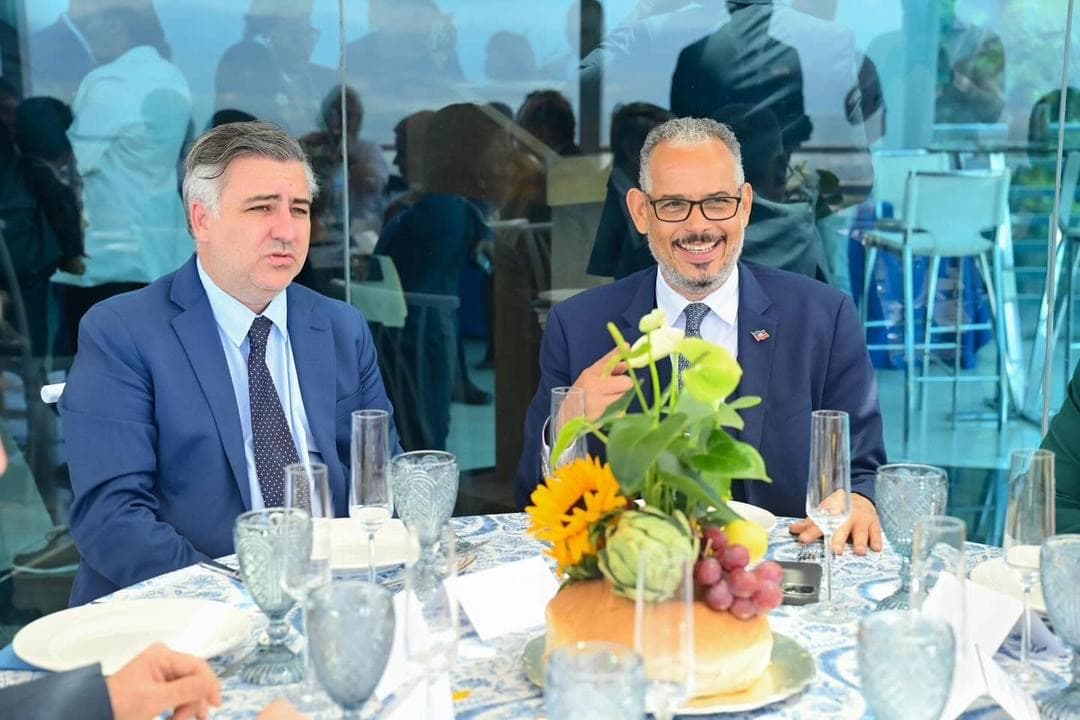
The Director General of the Anti-Corruption Unit (ULCC), Me Hans Jacques Ludwig Joseph, received Sancho Coutinho, Head of Political Affairs and Good Governance at the United Nations Integrated Office in Haiti (BINUH), this Thursday. At the heart of the discussions was the implementation of point 4 of UN Security Council Resolution 2814 (2026), which entrusts BINUH with a specific support mission for the ULCC.
Adopted on March 19, 2026, this resolution extends BINUH's mandate for an additional year and strengthens its role in sanctions. Point 4, the focus of the meeting, explicitly tasks BINUH with cooperating with the Sanctions Committee and its panel of experts to “facilitate the ULCC in raising awareness, among other things, of the reporting mechanism for potential violations of sanction measures.”
Clearly, the UN is asking its mission in Haiti to support the ULCC in disseminating and operationalizing a mechanism that allows any citizen or institution to report violations of the international sanctions regime — whether it concerns gang financing, arms trafficking, or corruption of economic and political elites targeted by restrictive measures adopted by the Security Council since 2022.
For the ULCC, this mission represents a dual recognition. Firstly, of its status as a pivotal institution in the fight against corruption and money laundering, to the extent that the Security Council considers it a privileged interlocutor in the sanctions framework. Secondly, of its technical capacity to assume a new responsibility, even though the institution, created in 2004, has often been criticized for the lack of concrete judicial follow-ups to its investigations.
The ULCC statement emphasizes the “important” nature of this responsibility, which the institution intends to assume “in accordance with the obligations of the Haitian state.” The phrasing is not insignificant: it recalls that Haiti is bound by Security Council resolutions, and that non-compliance with these obligations could expose the country to additional sanctions.
However, this new mission raises several questions. Firstly, regarding resources. The ULCC, already facing budgetary and security constraints, will have to deploy an awareness campaign on reporting mechanisms in a country where insecurity limits movement and trust in institutions remains fragile. Secondly, regarding credibility: how can citizens be convinced to report violations when previous ULCC reports on influential figures have never led to convictions?
Finally, this increased cooperation between the UN and the ULCC comes in a context where the sanctions regime has already targeted several figures of the Haitian political and economic elite. In theory, the reporting mechanism could allow for the documentation of new violations and feed the lists of the Sanctions Committee. In practice, its effectiveness will depend on the political will of the Haitian authorities to follow up on reports, and on BINUH's ability to protect whistleblowers in an environment where reprisals are common.